Export Documents from China: What You Need and Why
Commercial invoice, packing list, bill of lading, certificate of origin and more: a checklist of the documents that move your goods through customs.
 By the Made in China Easy team, Guangzhou ·
Customs in your country will ask for documents before they release your goods. Most delays come from a missing document or a mismatch between documents. Use this checklist with every shipment.
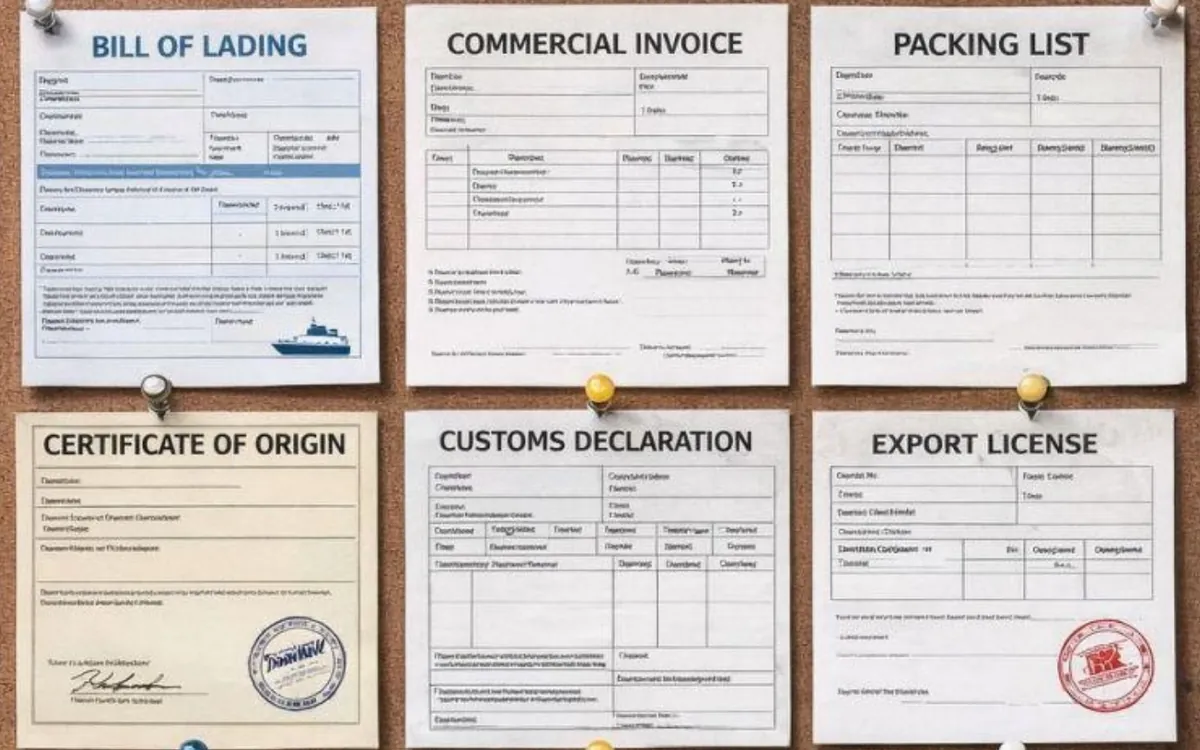
The core documents
- Commercial invoice: seller, buyer, description, HS code, quantity, unit price, total value, currency and Incoterm. It is the basis for your duty.
- Packing list: cartons, weights, measurements and what is in each carton. It must match the invoice.
- Bill of lading (B/L) or air waybill: the transport contract and, for sea freight, the document of title. Check the consignee name carefully.
- Export declaration: filed in China by the supplier or forwarder. Required for every commercial export.
Often required
- Certificate of origin: proves the goods were made in China. Some trade agreements give lower duty with a specific form (for example Form E for some Asian countries).
- Inspection report: from a pre-shipment inspection, for your own records or when your buyer asks for it.
- Product certificates and test reports: for example CE, FCC, RoHS or food-contact tests, depending on the product and your country.
- Fumigation certificate: for wooden pallets and packaging in many countries (ISPM 15).
- Insurance certificate: when the cargo is insured, as with CIF terms.
Before the ship sails
- Compare invoice, packing list and B/L line by line: names, quantities, weights.
- Send copies to your customs broker so they can prepare the import declaration.
- Decide how the B/L is released: original documents, telex release or sea waybill.
How we help
We check the documents with your supplier before departure and send them to your customs broker. Ask about shipping.
Published . General information, not legal, tax or financial advice.